The Enrollment Signal Report: What's Actually Changing About How Students Find and Choose Your School
Most enrollment forecasts either restate what everyone already knows (the applicant pool is shrinking) or arrive too late to act on. This report focuses on three specific, current signals: one structural, one time-sensitive, and one most institutions haven't measured yet.
The three signals
| Signal | Current status | What it means |
|---|---|---|
| The enrollment cliff | U.S. high school graduates peaked in 2025 and are now in structural decline, a projected 13% drop by 2041. This isn't a future risk anymore; smaller incoming classes are already showing up at many institutions this year | The applicant pool itself is shrinking. Volume-based recruitment strategies that worked five years ago don't scale the same way against a smaller pool |
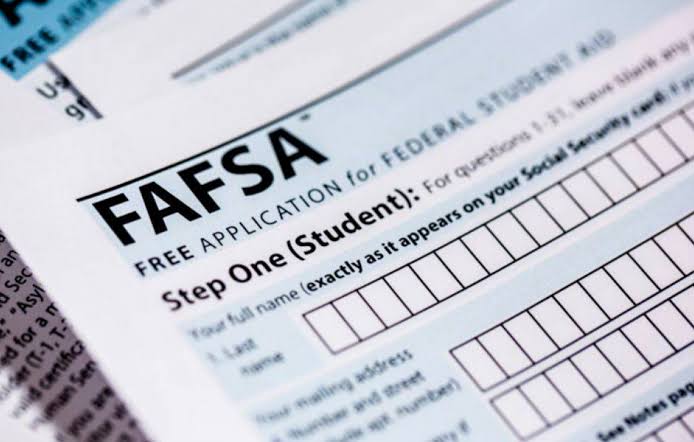
| The next FAFSA cycle | The 2027-28 FAFSA opens by October 1, 2026, essentially now. Earlier filing has consistently meant stronger aid packages for families who apply early | Families who file first get better offers. Institutions that push early-filing messaging now, not in January, put their prospects in a stronger position and reduce melt |
| AI-driven college search | A survey of over 5,000 high schoolers found 46% now use AI tools like ChatGPT during their college search, up from 26% a year earlier. 18% removed a school from consideration based on what AI surfaced about it | Some schools are being filtered out before a human ever reviews an application. If your institution's information isn't accurate or visible in AI search results, you may be losing prospects you never knew you had |
What this means, by function
For Admissions and Recruitment. The cliff means every single prospect matters more than it did five years ago, and there's less room to make up for a soft recruiting season with volume. At the same time, the AI search shift means the funnel now starts somewhere admissions can't fully see or control: a conversation between a student and a chatbot, before your website or your outreach ever enters the picture. Worth checking what a student would actually learn about your institution if they asked an AI assistant right now.
For Financial Aid. The FAFSA window is the clearest, most actionable item here. Every week a family delays filing is a week of aid dollars that may not be there later. Early, direct messaging about the FAFSA opening, not a generic "file your FAFSA" reminder but something timed to land now, is one of the few levers financial aid offices can pull immediately with real impact on yield.
For Marketing and Communications. Traditional SEO tracks whether you rank on a Google results page. It says nothing about whether ChatGPT, Claude, or Gemini describes your institution accurately, or cites you at all. Based on HubSpot's own 2026 AI-search research, a few specific things move that needle:
- FAQ and glossary-style pages perform disproportionately well. A clear, direct-answer page about tuition, deadlines, or program requirements is more likely to get cited than a general "About Us" page.
- Persona-specific program pages outperform generic ones. A page built around "Nursing for career-changers" or "Business for first-generation students" gives AI something specific to point to when a student asks a specific question.
- Outdated third-party listings actively hurt you. If your Wikipedia page, Niche.com profile, or College Board listing has old tuition numbers or discontinued programs, AI tools may repeat that outdated information to a prospective family.
- Site speed and technical setup matter more than people expect. If admissions pages are slow to load or JavaScript-heavy, AI crawlers may not see them at all, regardless of how good the content is.
- One thing not worth the effort: the "llms.txt" file some vendors are pushing as an AI-visibility fix. Early testing shows it has little to no measurable impact.
For Leadership (VP Enrollment, President's Cabinet). Read together: the pool is smaller, the aid conversation has to move earlier, and a meaningful share of your prospects are now forming an opinion about your institution somewhere you can't see. None of this is a crisis on its own. Together, it's a case for treating recruitment as more precision-dependent than it's ever had to be.
A quick check you can run this week
- Ask ChatGPT, Claude, or Gemini "what's tuition at [institution]" and "what programs does [institution] offer for [common major]," then compare the answer to what's actually true.
- Search your institution's name plus "closed" or "discontinued" to see if AI is surfacing outdated program information.
- Click through from an AI-generated answer about your institution and see if any links are broken or misdirected.
- Check whether your top 3–5 program pages load quickly and don't depend heavily on JavaScript to display content.
What to do now
- Push FAFSA-opening messaging to prospective and admitted families this week, not after the fact.
- Run the AI-search check above and note any gaps or missing information.
- Review whether your recruitment funnel assumes a volume of prospects your applicant pool can no longer reliably deliver.
- Identify which of your top feeder high schools or regions are most exposed to the enrollment cliff, and where recruitment focus may need to shift.
We built this report because most of the institutions we talk to are already aware the applicant pool is shrinking, but far fewer have looked at how prospective students are actually forming opinions about them before ever making contact. The AI search shift in particular is moving faster than most recruitment strategies have adjusted for.
If any of this raises questions about your institution's recruitment funnel or how you show up in AI-driven search, reach out. We'd welcome the conversation.
This report is updated as enrollment and financial aid data changes. Last updated: September 21, 2026.